
It’s that time of year when the finish line is finally in sight, summer break is just around the corner, and your child can feel it. The backpack gets a little heavier to carry, the evenings get a little harder to manage, and suddenly getting homework done feels like pulling teeth.
Sound familiar? You’re not alone. In this post, we’re breaking down exactly how to build a homework routine that actually sticks — even when summer is calling.
Before we get into the “how,” let’s talk about the “why” because understanding the real value of a consistent routine makes it much easier to commit to one.
A regular homework time creates a sense of rhythm in the day, helping your child know when to stop other activities and focus on schoolwork. This predictability can lessen anxiety and build a habit where homework simply becomes a part of the daily routine rather than a surprise every evening.
When homework happens at the same time every day, it stops being a battle and starts being just another part of the afternoon, like snack time or dinner. The resistance drops because kids know what’s coming.
💡 Two key strategies reduce homework hassles: establish clear routines around when and where homework gets done, and build in small rewards for children for whom good grades alone aren’t a sufficient motivator.
And here’s the bonus: the organizational habits your child builds now don’t disappear when the school year ends. They carry over into summer reading programs, camp schedules, and eventually into how they manage their time as teenagers and adults.
Step 1
The number one reason homework routines fail? Inconsistency. When homework happens at a different time every day, kids never mentally shift into “focus mode” and neither do parents.
Here’s a simple framework to find your family’s best homework window:
Once you pick a window, protect it. That means phones away, TV off, and everyone in the household respecting that it’s focus time.
Step 2
Where your child does homework is just as important as when they do it. A chaotic, cluttered space makes it almost impossible to concentrate, especially for younger kids who are easily distracted.
This is where physical organization tools make a real difference. Color-coded notebooks — one per subject — mean your child never spends five minutes hunting for the right folder. Explore SONS Notebooks’ color-coded organization system to see how a simple color system transforms how your child manages school materials.

Step 3
One of the biggest homework stressors for kids isn’t the work itself, it’s not knowing what they’re supposed to do, or forgetting which assignment is due when.
Step 4
Here’s the hard truth: routines are easiest to build in September and hardest to maintain in May. With field trips, end-of-year events, and the general energy of “almost summer,” focus slips — fast.
🍎 Make it feel special
Let your child choose their homework snack, pick a playlist, or earn a small reward for completing homework without being reminded five times.
⏰ Reduce the friction
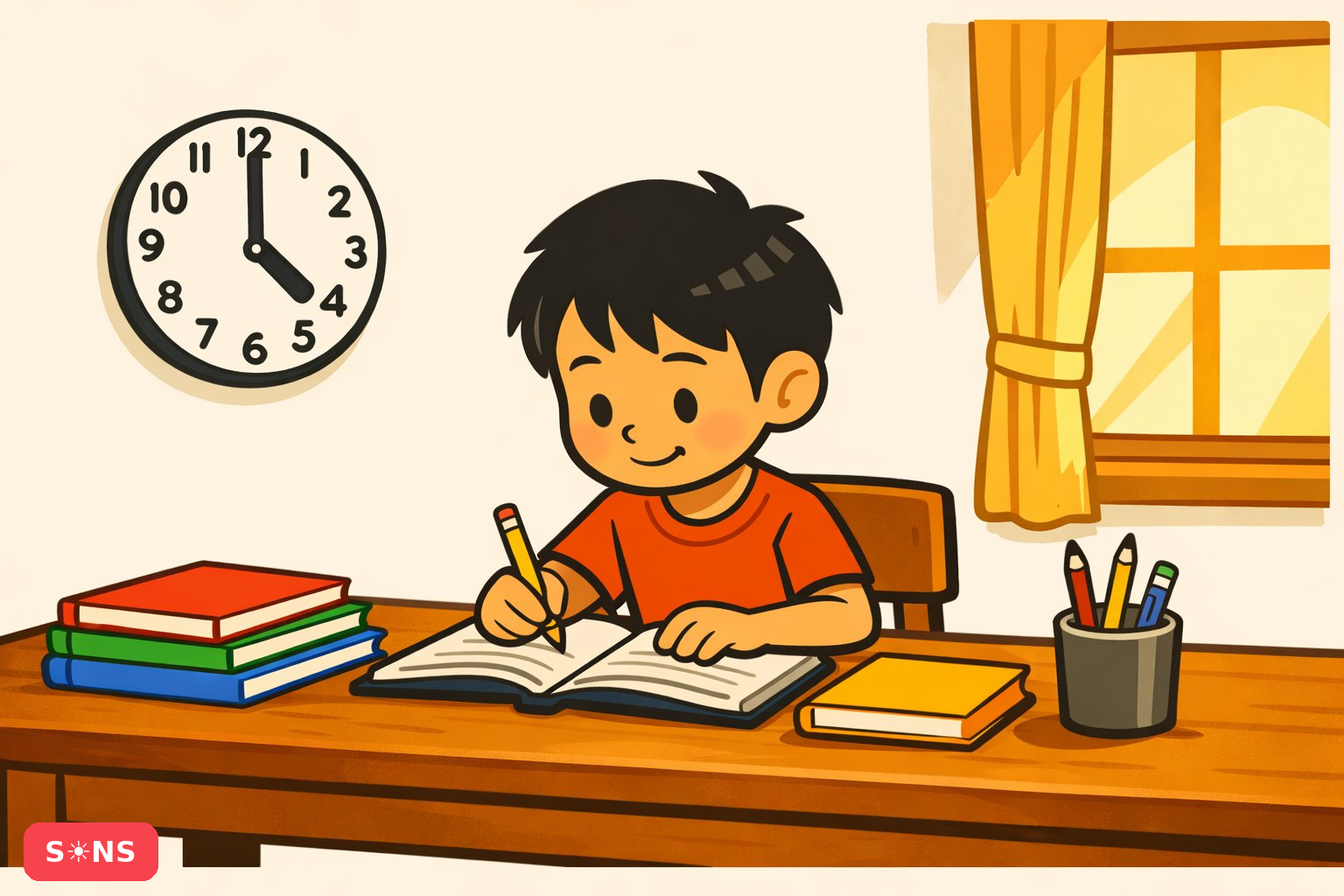
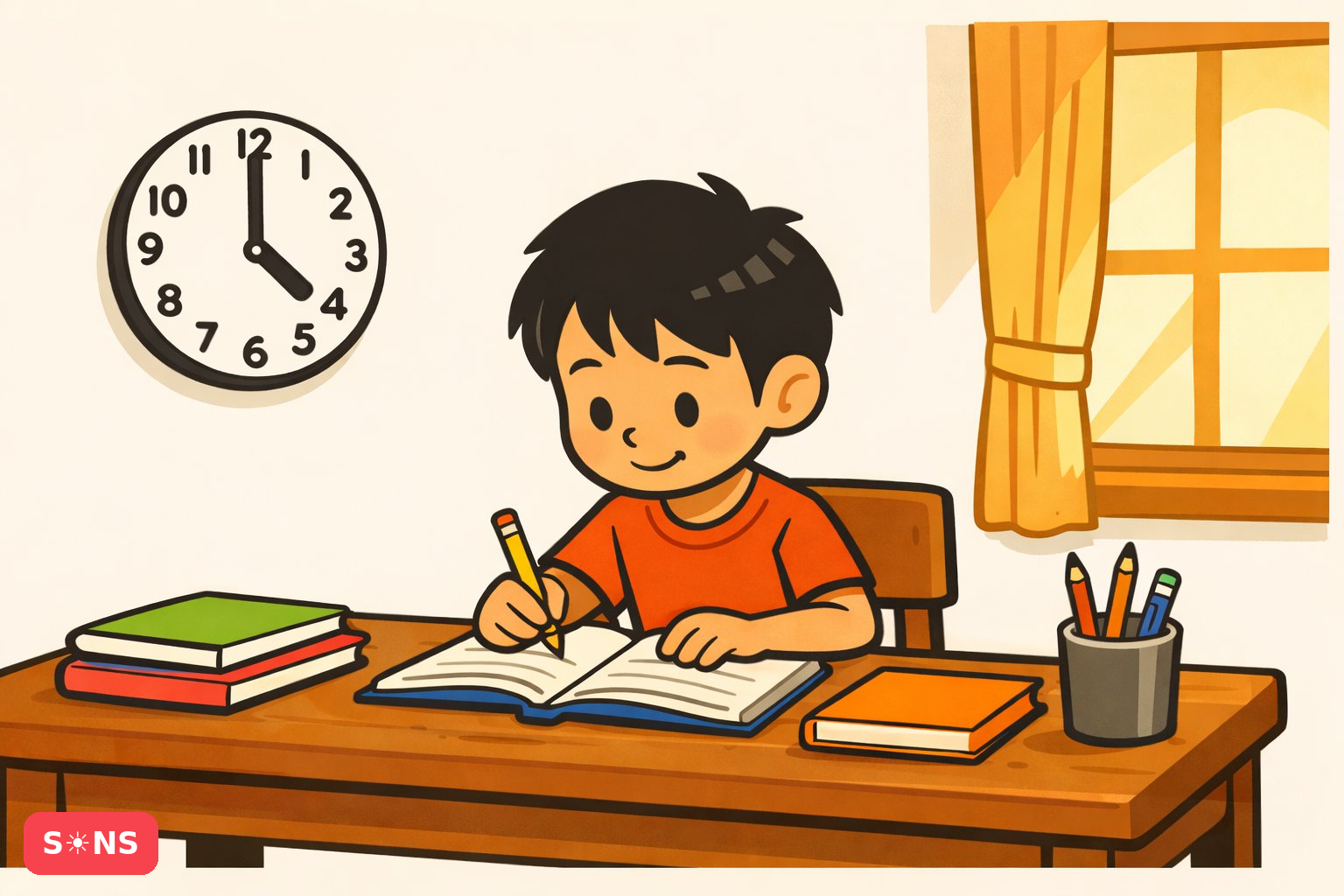
Choose a consistent time window, such as 4:00–5:00 PM, and protect it. The less effort it takes to start, the more likely your child will actually do it.
🌟 Celebrate the finish line
At the end of each week, acknowledge that your child completed their routine. Even a simple “I’m proud of you for staying consistent” goes a long way.

Step 5
This is the step most parents skip and it makes all the difference. The two weeks before summer break are the perfect time to transition the homework routine into a summer learning routine.
📖 The National Education Association endorses 10 minutes of learning activity per grade level per night — so a 4th grader aims for about 40 minutes. Manageable, and it keeps the brain engaged all summer long.
Building a homework routine that sticks before summer doesn’t have to mean adding more stress to your evenings. It means creating a small, predictable structure your child can rely on and that you can actually sustain.
Pick a consistent time. Create a distraction-free space. Give your child simple tools to stay organized. Celebrate the small wins. And when summer arrives, keep the habit going in a lighter, more joyful form.
The students who finish the school year strong with their materials organized, their assignments tracked, and their routines intact, are the ones who return in the fall ready to hit the ground running.
Explore the SONS color-coded notebook system — designed to help students feel organized, prepared, and confident all year long. Explore the SONS System →