

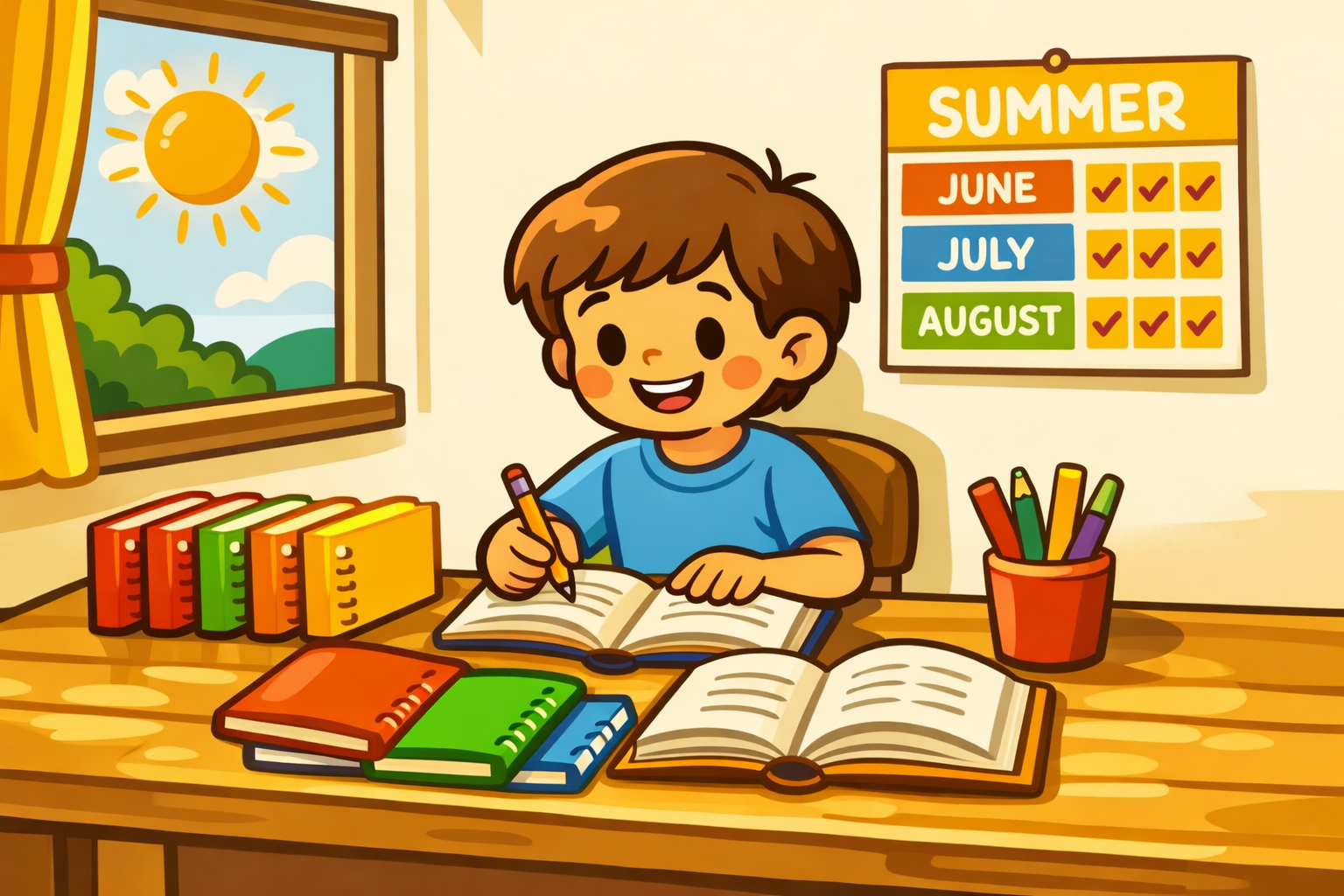
Summer is finally here and with it comes a wave of relief for students and parents alike. No more early mornings, no more homework battles, no more rushed lunches. Just sunshine, freedom, and the sweet exhale of a school year finished.
But here’s something most parents don’t find out until September: while your child is relaxing, their brain is quietly forgetting. It’s called summer learning loss and this guide will show you exactly how to stop it.
Summer learning loss refers to the decline in academic skills and knowledge that students experience during summer vacation when they’re not engaged in regular learning. It’s also called the “summer slide” and the data behind it is striking.
A study of 18 million first- to sixth-graders published in the American Educational Research Journal found that kids can lose up to 40% of a school year’s learning over summer break and the effect is cumulative if learning loss continues across consecutive summers.
On average, test scores flatten or drop during the summer, with larger drops typically seen in math than in reading. Students often return to school in the fall not just where they left off, but behind it.

Understanding the cause makes solving it much easier. Summer learning loss isn’t about laziness or a lack of intelligence, it’s about the absence of structure and routine.
In a 2024 survey of nearly 1,000 educators, disruption of routine and lack of consistency was ranked as the top contributing factor to summer learning loss out of seven possible options. The second biggest factor was a lack of structured learning opportunities. The third was a lack of resources at home.
Think about what school provides that summer doesn’t: a consistent daily schedule, regular mental stimulation, social interaction around learning, and built-in accountability. When all of that disappears overnight on the last day of school, the brain simply has less reason to stay sharp.
📊 The subject hit hardest? Math takes the biggest hit because reading is woven into everyday life while math often is not. A child might read signs, menus, and messages all summer but unless someone is practicing multiplication, those skills fade faster.
Here’s the part parents usually get wrong: preventing summer learning loss doesn’t require replicating school at home.
Experts agree that parents need to set aside only 15–30 minutes a day to maintain and build reading skills. For a broader approach covering reading, math, and writing, a regular short daily learning routine of 30–60 minutes can make a big difference.
That’s it. Half an hour. Less than one episode of most kids’ shows. The key isn’t intensity — it’s consistency. A little every day beats a lot once a week, every time.
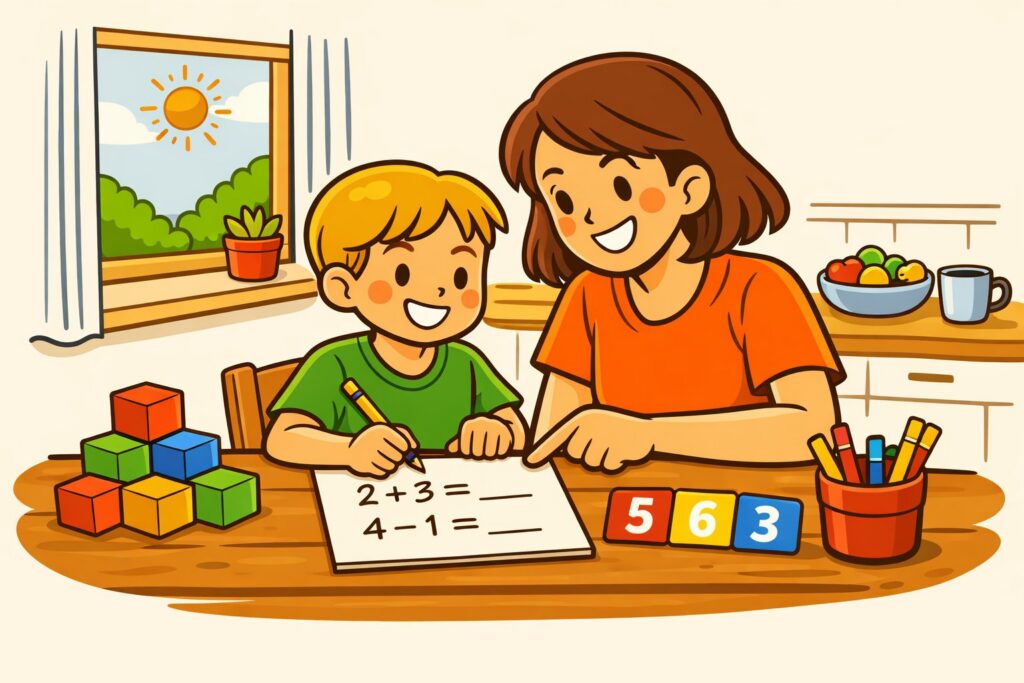
You don’t need to run a classroom, you just need a rhythm. Pick a consistent time each day and dedicate 30 minutes to learning. A simple structure might look like: 15 minutes of reading + 10 minutes of math practice + 5 minutes of journaling. Predictable, low-pressure, and effective.
Reading regularly is one of the most effective ways to combat summer learning loss. Many students who maintain a reading habit over summer actually make gains, not just hold steady. The trick is choice: let kids pick their own books. Graphic novels, audiobooks, and adventure stories all count. For older students, reading just 6 books over summer is enough to prevent learning loss.
Math is the subject most vulnerable to the summer slide and the easiest to practice without it feeling like schoolwork. Let your child calculate the tip at a restaurant, measure ingredients when cooking, or figure out the better deal at the grocery store. For older kids, 1–2 hours of math practice per week on sites like Khan Academy, IXL, or Delta Math helps maintain and advance skills.
Doing new things helps kids learn new words and ideas. A walk in nature, a visit to a museum, or an online virtual field trip, exploring a butterfly house, seeing Mars, or visiting the Great Wall of China without leaving home. All build vocabulary and curiosity. Ask questions. Look things up together. Let curiosity lead.
One overlooked prevention strategy is keeping your child’s organizational habits alive through summer. The students who return to school in August feeling confident are the ones who kept some structure going all season. Consider keeping a simple weekly learning journal, one notebook where your child writes what they read, what they learned, and what they want to explore next. The SONS color-coded notebook system works just as well in summer as it does in September.
When parents read alongside their kids, ask about what they’re learning, or turn everyday moments into math problems, the message is clear: learning doesn’t stop just because school does. Model it. Talk about it. Make it part of the family culture. Not a chore, but a normal part of how your household operates all year long.

For students who are already behind, summer is both a risk and an opportunity. Research using MAP score comparisons found that 22–38% of students actually gained academic skills during summer break and proof that with the right support, summer can be a season of growth, not loss.
If your child struggled during the school year, even 20 focused minutes a day on their weakest subject can have a meaningful impact by September. Don’t wait for school to fix it, summer is your window.
🌟 The 2025 Education Recovery Scorecard reported that the average student was nearly half a grade level behind pre-pandemic achievement levels in math and reading. Summer is one of the best tools parents have to help close that gap, starting right now.
Summer learning loss is real, it’s well-documented, and it compounds over time. But it’s also one of the most preventable academic challenges your child will face because unlike classroom struggles, you have direct control over what happens at home between June and August.
You don’t need to eliminate summer fun. You just need to protect 30 minutes of it every day for something that matters.
Read together. Practice math in the kitchen. Keep a notebook. Stay curious. That’s the complete guide and it fits in the palm of your hand.
Explore the SONS color-coded notebook system — designed to help students stay organized, focused, and confident from June through August and beyond.Explore the SONS System →